Ebb and flow is the hydroponic system that breathes. Several times a day a pump floods a tray of plants with nutrient solution, then switches off and lets it all drain back to the reservoir. As the water leaves, it pulls fresh air down into the growing medium. Feed, drain, breathe, repeat: that rhythm is what makes flood and drain so versatile.
Quick answer: Ebb and flow (also called flood and drain) is a hydroponic system in which a timer-controlled pump floods a grow tray with nutrient solution for 10 to 20 minutes, then lets it drain back into a reservoir below. Roots get water and nutrients during the flood and oxygen as it drains. It suits almost any crop, from lettuce and herbs to peppers, and works well with clay pebbles or rockwool.
How ebb and flow works
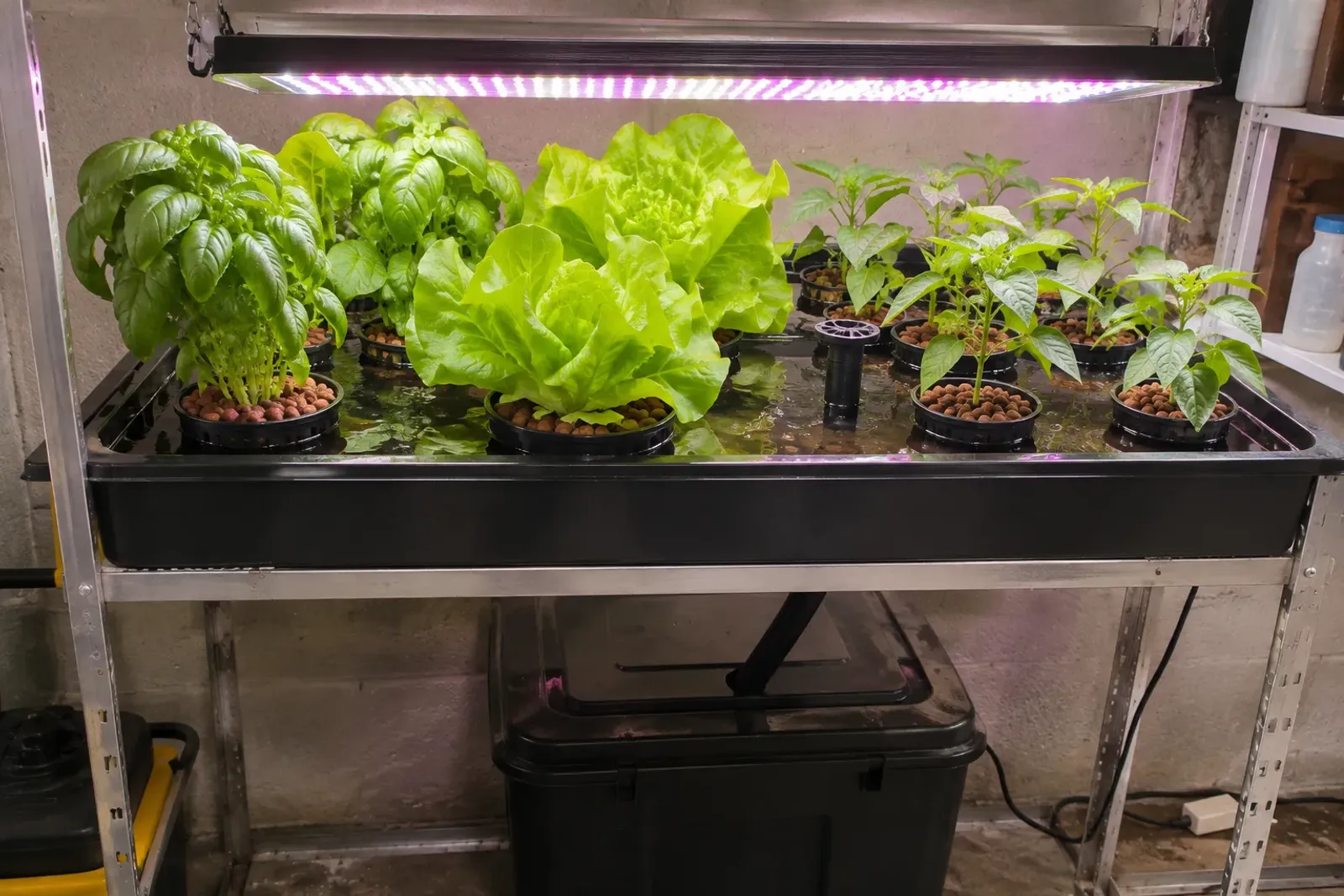
- Grow tray (flood table) on top, holding pots or a bed of medium.
- Reservoir underneath, holding the nutrient solution.
- Submersible pump on a timer that pushes solution up into the tray.
- Overflow fitting set at the maximum flood height, so the tray can never overfill.
- Drain: when the pump stops, solution flows back down through the pump line or a separate return.
The overflow is the safety device. It sets the water level about an inch (2 to 3 cm) below the top of the medium, so stems stay dry and the solution never spills.
Flood timing
There is no single right schedule: it depends on medium, plant size, light and temperature. These are sensible starting points.
| Medium | Flood length | Floods per day (lights on) |
|---|---|---|
| Clay pebbles (LECA) | 15 min | 4 to 6 |
| Rockwool cubes | 10 to 15 min | 1 to 3 |
| Coco coir in pots | 10 min | 2 to 4 |
| Growstones / perlite mix | 15 min | 3 to 5 |
Clay pebbles hold little water, so they need frequent floods. Rockwool holds a lot, so flood less often or the roots stay too wet. Watch the plants: wilting at midday means flood more often; slow growth and pale, soggy roots mean flood less. Most growers do not flood at night unless it is hot.
What you need
- A flood tray (purpose-made trays have channels that help drainage)
- A reservoir that holds at least the volume needed to fill the tray, plus 30 percent
- A small submersible pump and a mechanical or digital timer with 15-minute steps
- Fill and drain fittings and an overflow tube
- Net pots or plastic pots with clay pebbles, rockwool or coco
- Nutrients, a pH meter and an EC meter
Pros and cons
| Pros | Cons |
|---|---|
| Works with almost any crop and many media | Depends on a pump and timer |
| Roots get excellent oxygen between floods | Medium can build up salts, so flush it monthly |
| Easy to move plants in and out of the tray | Reservoir level drops a lot during each flood |
| Good bridge between soil-style pots and hydroponics | A stuck overflow or failed timer can flood or starve plants |
Best crops
Ebb and flow is popular for herbs, lettuce, strawberries, peppers and seedlings, and for growers who like moving pots around. Large tomatoes can work in deep pots with a sturdy medium, but a drip system is often easier for big fruiting plants.
Common mistakes
- Reservoir too small: when the tray fills, the pump runs dry.
- Overflow set too high: stems sit in water and rot.
- Flooding rockwool too often: roots stay waterlogged.
- Never flushing the medium: salts build up and leaf tips burn. Rinse with plain pH-adjusted water every few weeks.
- Light reaching the tray: algae coat the medium. Cover gaps and use opaque trays.
Frequently asked questions
How often should an ebb and flow system flood?
With clay pebbles, start at 15 minutes four to six times during the light period. With rockwool, start at once or twice a day and adjust based on how wet the cubes feel.
Can I use soil in ebb and flow?
No. Soil compacts and turns to mud. Use inert hydroponic media such as clay pebbles, rockwool, coco coir or growstones.
What happens if the timer fails?
If it stays on, the overflow returns excess solution, so plants are flooded but not drowned. If it stays off, plants in clay pebbles can wilt within a day. Check the timer whenever you check pH.
Is ebb and flow good for beginners?
Yes, once you have tried a Kratky jar or DWC bucket. It has a few more parts, but it teaches you how water, air and medium work together.
Next step
- Compare it with other systems: types of hydroponic systems
- Get the feed right: hydroponic nutrients
- Start simpler: the Kratky method