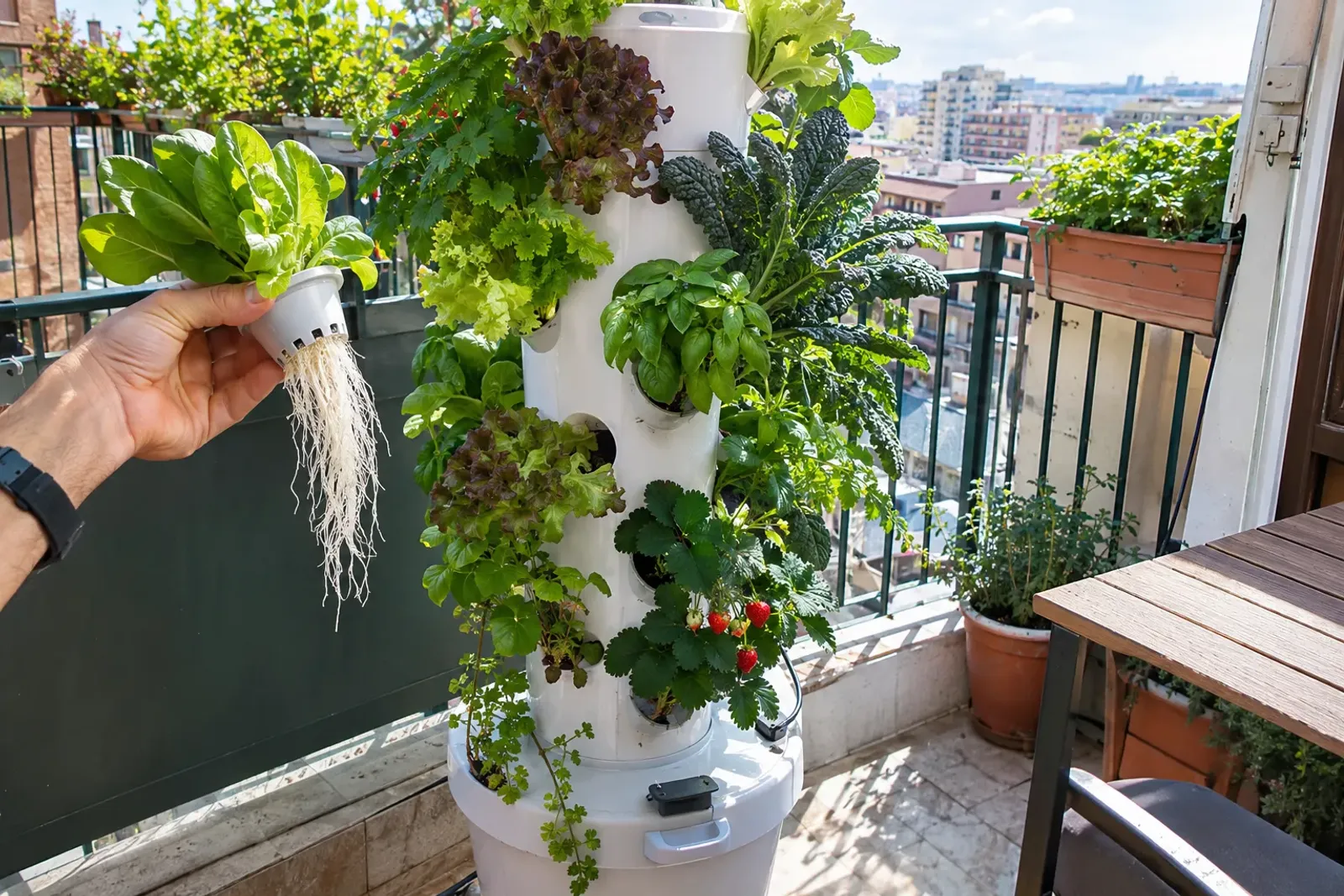
In aeroponics, roots do not sit in water or in any medium at all. They hang in a dark chamber and are sprayed with a fine mist of nutrient solution. With more oxygen than any other method can offer, aeroponic roots grow fast and plants follow. The catch is that the system has no buffer: if the misting stops, roots begin to dry out within minutes.
Quick answer: Aeroponics is a soilless method in which plant roots hang in air inside a closed, dark chamber and are sprayed with nutrient mist at regular intervals. Low-pressure systems use ordinary pumps and spray heads; high-pressure systems use special pumps and nozzles to create a very fine mist. Aeroponics gives excellent growth and uses very little water, but it is the least forgiving system if a pump, nozzle or timer fails.
How aeroponics works
- Root chamber: a lightproof box, tube or tower where roots hang freely.
- Reservoir and pump delivering solution to spray nozzles.
- Nozzles that turn the solution into mist or droplets.
- Timer that cycles the spray on and off, or keeps it on continuously in low-pressure systems.
- Drain returning unused solution to the reservoir.
Low pressure vs high pressure
| Low-pressure aeroponics (LPA) | High-pressure aeroponics (HPA) | |
|---|---|---|
| Droplet size | Large spray (above 100 microns) | Fine mist (around 20 to 50 microns) |
| Equipment | Standard submersible pump, sprayers | Diaphragm pump, accumulator tank, solenoid, fine nozzles |
| Spray cycle | Often continuous or long cycles | Seconds on, minutes off |
| Cost and complexity | Low | High |
| Typical use | Home towers, DIY | Research, commercial, enthusiasts |
Most "aeroponic" towers sold for homes are actually low-pressure systems, closer to a vertical NFT or drip system. They still grow very well, just without the extreme root oxygen of true high-pressure misting.
Pros and cons
| Pros | Cons |
|---|---|
| Excellent root oxygen and fast growth | No buffer: a failed pump or clogged nozzle can kill plants quickly |
| Very low water and nutrient use | Nozzles clog with salts or biofilm |
| No growing medium to buy | High-pressure equipment is expensive and technical |
| Easy to inspect roots | Needs reliable power, ideally a backup |
Is aeroponics worth it at home?
For most home growers, a well-built DWC bucket or NFT system gives almost the same growth with far less risk. Aeroponics makes sense if you enjoy tinkering, want to grow in a vertical tower or are curious about root science. If you try it, start with a low-pressure tower, keep a spare pump and check nozzles weekly.
Frequently asked questions
Is aeroponics better than hydroponics?
Aeroponics is a type of hydroponics. It can produce faster root growth, but it is less forgiving. For beginners, Kratky, DWC or NFT are better places to start.
How often should aeroponic misters spray?
Low-pressure systems often run continuously or for several minutes on and off. High-pressure systems typically spray for a few seconds every few minutes. Follow the system maker's guidance and adjust to plant size and temperature.
What grows well in aeroponics?
Lettuce, herbs, leafy greens, strawberries and seed potatoes are classic aeroponic crops. Large plants need strong support because there is no medium to hold them.
What happens if the power goes out?
Roots can start to dry out within minutes to an hour, depending on temperature and humidity. That is why aeroponic growers often use battery backups or alarms.
Next step
- Start with lower risk: deep water culture or NFT
- Compare all systems: types of hydroponic systems