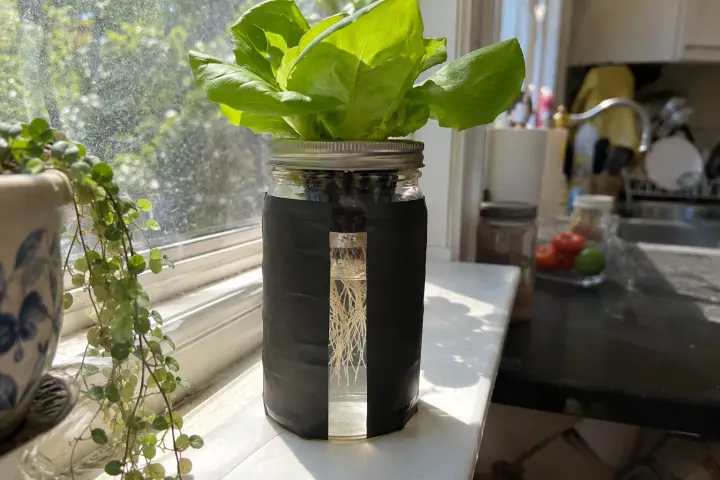
Deep water culture is the system most growers build right after their first Kratky jar. The idea is almost the same, roots hanging in a nutrient solution, with one important upgrade: an air pump that keeps the water full of oxygen. That single bubbler turns a slow, passive jar into one of the fastest-growing systems you can build at home.
Quick answer: Deep water culture (DWC) is a hydroponic system in which plant roots hang directly in an aerated nutrient solution. An air pump pushes air through an air stone at the bottom of the reservoir, so the roots get oxygen while they drink. DWC is simple, cheap and very fast for lettuce, herbs and, in larger buckets, tomatoes and peppers. Its weak points are water temperature and power cuts.
How deep water culture works
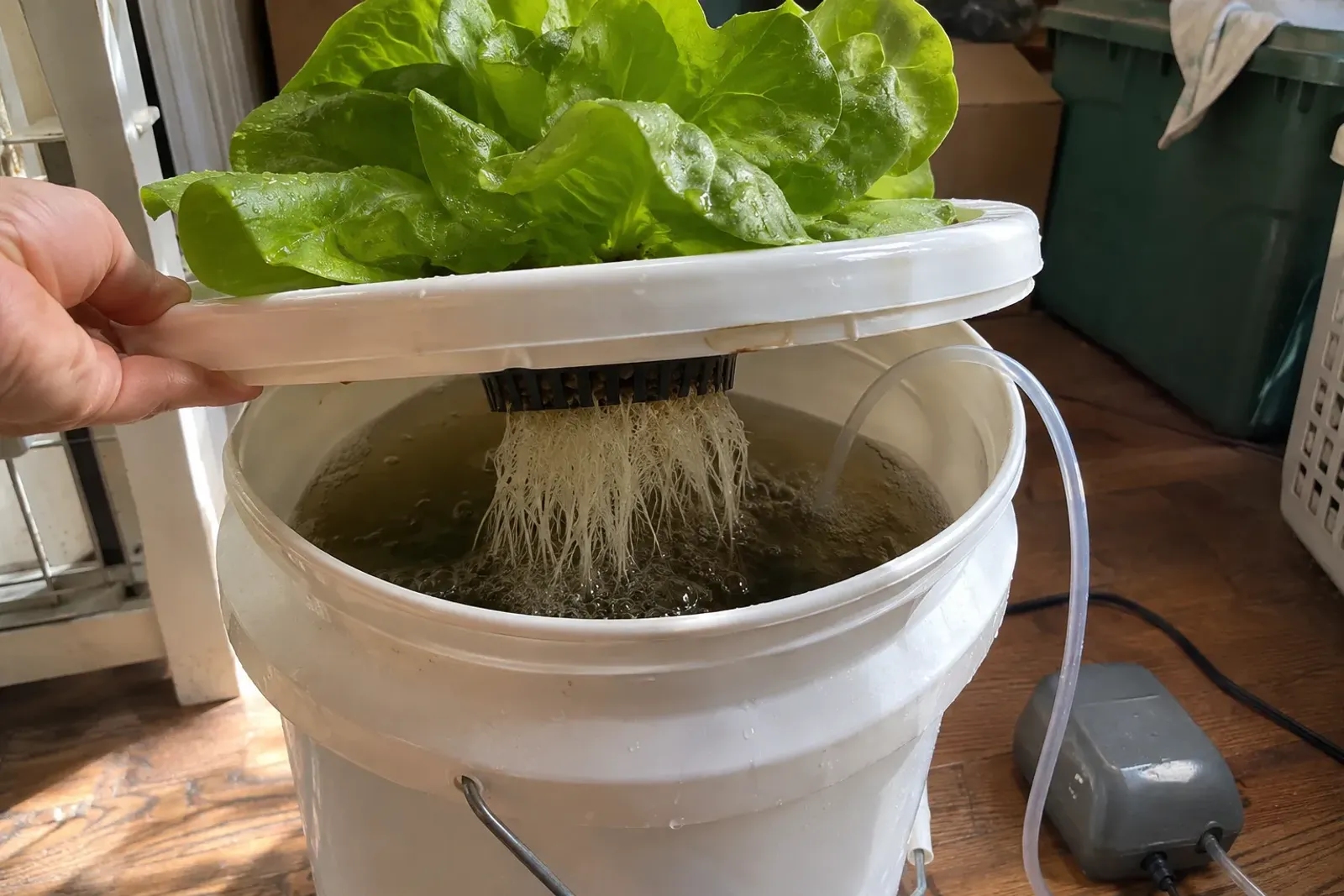
A DWC system has four parts:
- A reservoir: a bucket, tote or tub that holds the nutrient solution and blocks light.
- A lid with net pots: plants sit in net pots filled with clay pebbles or a rockwool plug, with roots growing down into the solution.
- An air pump and air stone: the pump sits outside the reservoir and pushes air through tubing to a stone at the bottom, which breaks it into fine bubbles.
- Nutrient solution: water plus a complete hydroponic nutrient, kept at the right EC and pH.
The bubbles do two jobs. They dissolve oxygen into the water and they keep the solution moving, so there are no stagnant corners around the roots. With enough oxygen, roots can stay fully submerged without rotting, which is what makes DWC different from a Kratky jar, where the plant relies on an air gap.
DWC vs Kratky vs NFT
| Kratky | DWC | NFT | |
|---|---|---|---|
| Power needed | None | Air pump (2 to 5 W) | Water pump, runs 24/7 |
| Growth speed | Good | Very fast | Very fast |
| Best for | Lettuce, herbs | Lettuce, herbs, tomatoes, peppers | Lettuce, herbs, strawberries |
| Main risk | Running out of water | Warm water, power cuts | Pump failure, clogged channels |
| Cost to start | Lowest | Low | Medium |
What you need for a single DWC bucket
- A 5-gallon (19 liter) bucket that does not let light through, with a lid
- One or two 3 inch (7.5 cm) net pots and a hole saw of the same size
- An air pump rated for at least 1 liter per minute per gallon of solution
- Airline tubing, a check valve and a 2 to 4 inch air stone
- Clay pebbles or rockwool cubes
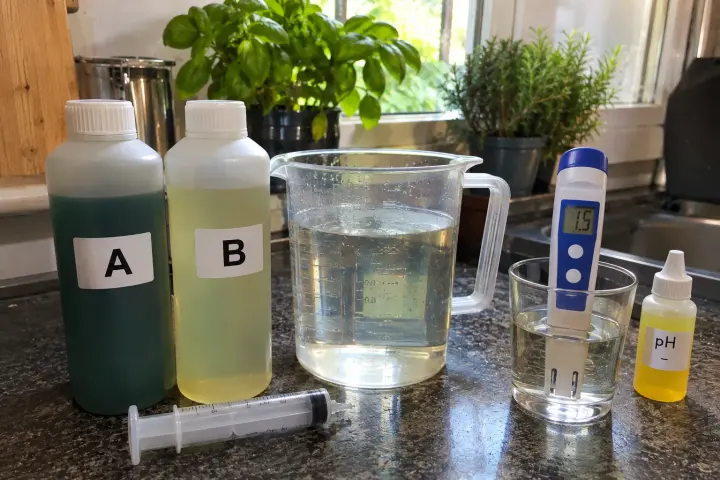
- A complete hydroponic nutrient, a pH meter or drops, and an EC meter
How to set up a DWC bucket
- Cut the lid. Drill one hole in the center for a single large plant, or up to four for lettuce and herbs. Add a small hole for the air line.
- Place the air stone. Put it in the middle of the bucket floor and run the tubing out through the lid to the pump. Fit the check valve so water cannot siphon back into the pump if the power goes off.
- Mix the solution. Fill the bucket with water, add nutrients following the label (part A and B separately if it is a two-part feed), then adjust pH to 5.8 to 6.2.
- Set the level. For seedlings, the solution should touch the bottom of the net pot. As roots grow out, lower the level by an inch or two so the upper roots sit in humid air.
- Start the pump. It runs 24 hours a day. You should see a steady, rolling boil of fine bubbles.
- Add plants. Transplant seedlings with two or three true leaves, and keep the bucket somewhere with good light and stable temperature.
The numbers that matter
| Setting | Target | Why |
|---|---|---|
| Water temperature | 65 to 68 °F (18 to 20 °C) | Warm water holds less oxygen and invites root rot |
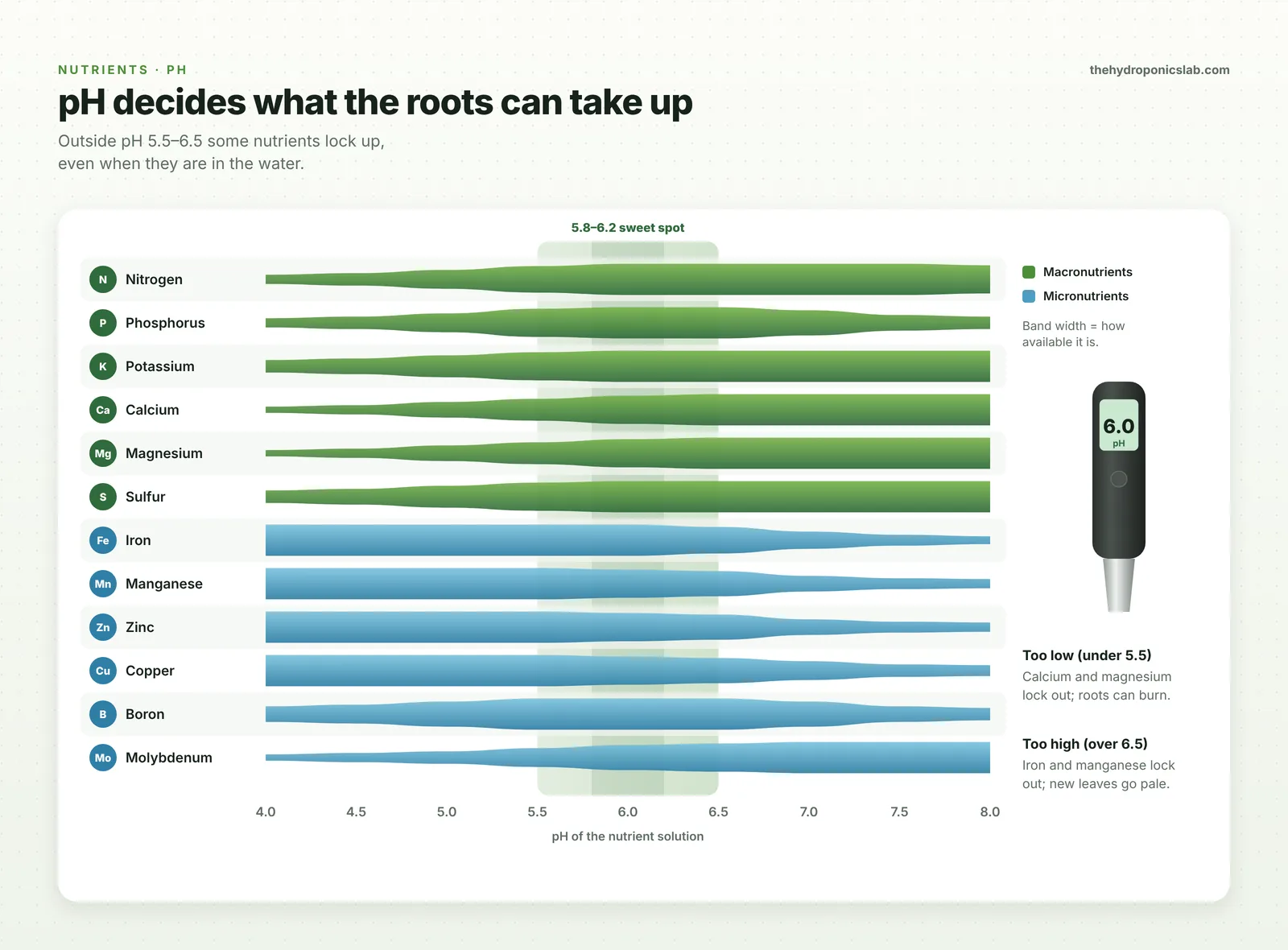
| pH | 5.8 to 6.2 | Keeps every nutrient available |
| EC (lettuce, herbs) | 1.0 to 1.6 mS/cm | Leafy crops like a lighter feed |
| EC (tomatoes, peppers) | 2.0 to 3.5 mS/cm | Fruiting crops need more |
| Air | 1 L/min per gallon or more | More is better, within reason |
Above about 72 °F (22 °C), dissolved oxygen drops fast and the risk of root rot climbs. In summer, keep reservoirs out of direct sun, paint or wrap them white, and consider a larger volume, which warms more slowly.
Maintenance
- Top up with plain water as plants drink, and check EC and pH every few days.
- Change the solution every two to three weeks, or sooner if EC and pH drift a lot.
- Look at the roots once a week. Healthy roots are white or cream and smell fresh. Brown, slimy roots that smell bad are an emergency: see root rot in hydroponics.
- Clean between crops with a mild hydrogen peroxide or bleach rinse, then rinse well.
Common DWC mistakes
- No check valve, so a power cut siphons water into the pump.
- Translucent buckets, which grow algae inside within days.
- Water too warm, the number one cause of DWC root rot.
- Too much plant for the bucket: one tomato per 5 gallons is plenty.
- Forgetting the pump: if it stops, roots can start to suffocate within hours on a warm day.
Frequently asked questions
Does the air pump need to run all the time in DWC?
Yes. Submerged roots depend on the bubbles for oxygen, so the pump should run 24 hours a day. If you want a system with no pump at all, use the Kratky method instead.
How big should a DWC reservoir be?
For lettuce and herbs, 3 to 5 gallons for four plants works well. For a tomato or pepper, use one 5-gallon bucket per plant. Bigger reservoirs are more stable in temperature, pH and EC.
Can I use tap water for DWC?
Usually yes. Let chlorinated water stand for a day, or use a carbon filter if your supply uses chloramine. If your water is very hard (EC above 0.5 mS/cm), consider mixing it with filtered or rain water.
Why are my DWC roots turning brown?
Brown roots usually mean warm water, low oxygen or a pathogen. Check temperature first, increase aeration, and change the solution. Some nutrients stain roots tan without harming them, so check whether the roots are also slimy and smelly.
Is DWC better than NFT?
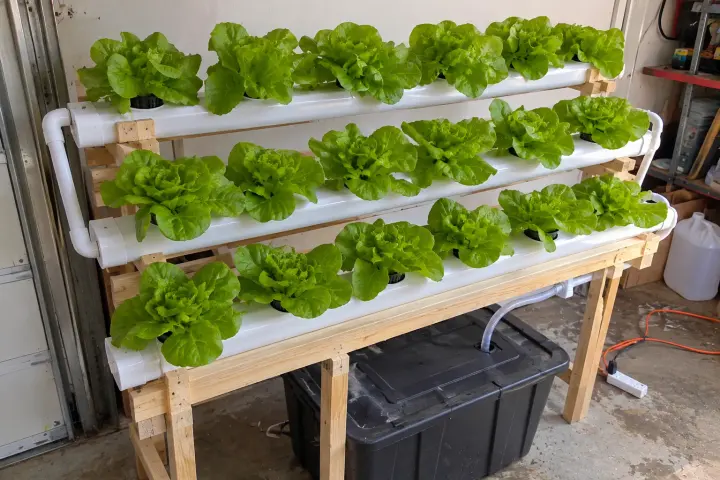
DWC is more forgiving for beginners, because the reservoir buffers short power cuts and mistakes. NFT uses less water and scales better for many plants. Compare them in DWC vs NFT.
Next step
- Build one this weekend: 5-gallon bucket DWC
- Get the feed right: hydroponic nutrients and the ideal pH
- Compare all systems: types of hydroponic systems