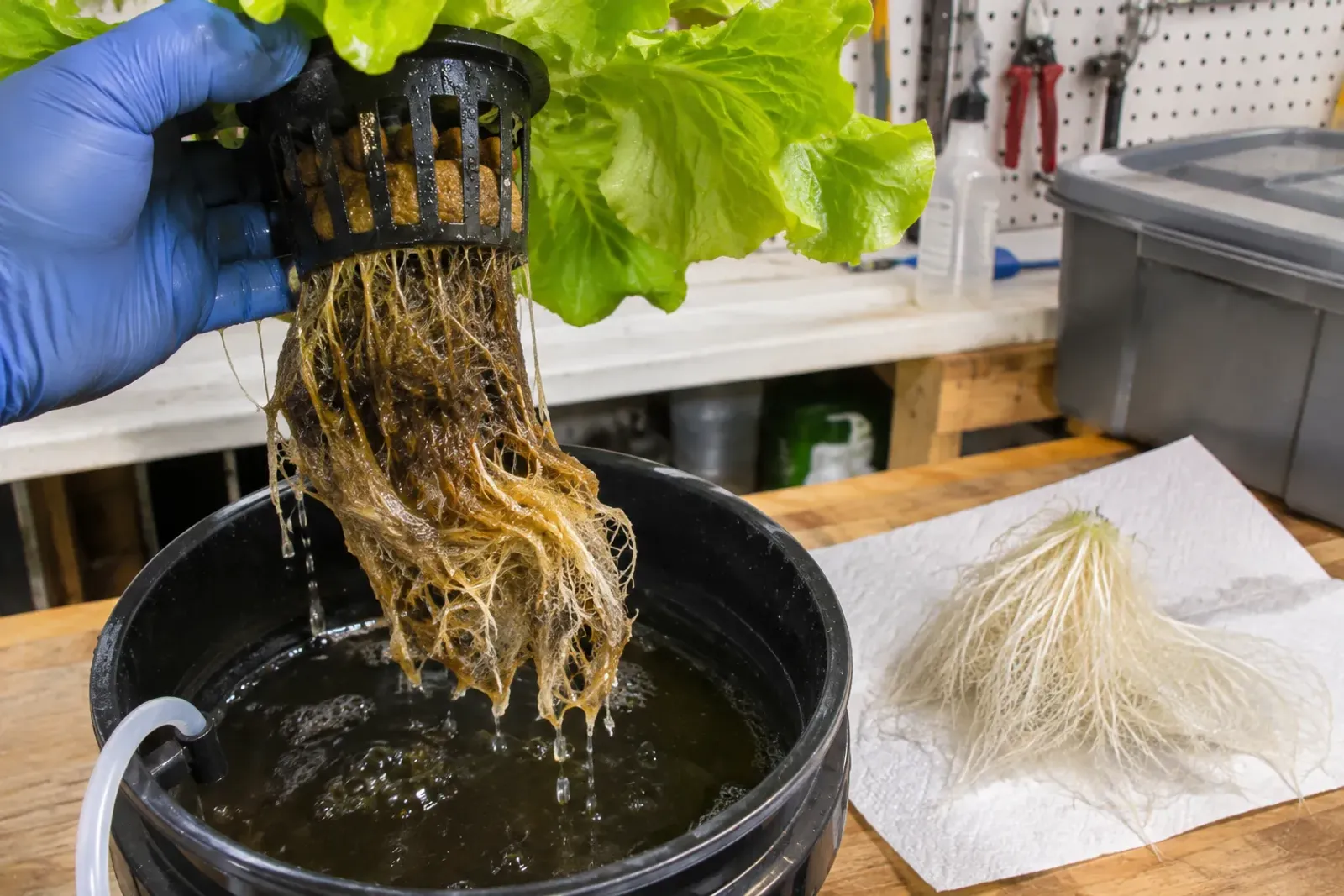
Healthy hydroponic roots are white, firm and smell faintly earthy. When they turn brown, slimy and start to smell like a drain, you are looking at root rot, the most serious common problem in water-based systems. Caught early, it can be stopped. Ignored, it can empty a DWC bucket in a few days.
Quick answer: Root rot is an infection, usually by Pythium, that takes hold when roots are short of oxygen, mostly because the water is too warm (above 22 to 24 °C, 72 to 75 °F), poorly aerated, exposed to light, or dirty. Signs: brown, slimy, smelly roots and plants that wilt even with plenty of water. To fix it: trim the dead roots, clean and sterilize the system, refill with cool fresh solution, increase aeration and add beneficial bacteria or a mild hydrogen peroxide dose.
How to recognise root rot
| Healthy roots | Root rot |
|---|---|
| White or cream | Tan, brown or gray |
| Firm, fuzzy with fine root hairs | Slimy, mushy, outer layer slides off |
| Earthy or no smell | Smells like rotten eggs or a drain |
| Plant upright, growing | Plant wilts in the day, even with water |
Note that roots stained by some nutrients or supplements can look tan but stay firm and odor-free. Slime and smell are the real warning signs.
What causes it
- Warm water. Warm water holds less oxygen, and Pythium thrives above 24 °C (75 °F). This is the number one cause.
- Low oxygen. A failed air pump in DWC, a stagnant Kratky jar overfilled to the top, or a clogged NFT channel.
- Light in the reservoir. Light feeds algae, which die and rot.
- Organic debris. Dead roots, fallen leaves or organic nutrients feeding bacteria.
- Contaminated equipment carried over from a previous crop.
How to fix it, step by step
- Remove the plant and rinse the roots gently in cool, clean water.
- Trim all brown, mushy roots with clean scissors. Keep anything white and firm.
- Empty and clean the reservoir, lid, pump, air stones and tubing. Scrub off slime and rinse with a diluted bleach (about 1 tablespoon per gallon, 4 ml per liter) or hydrogen peroxide solution, then rinse well.
- Refill with fresh, cool nutrient solution at a slightly lower EC than usual.
- Choose a treatment:
- Beneficial bacteria (Bacillus-based root inoculants) colonize the roots and crowd out Pythium. The best long-term option.
- Hydrogen peroxide (3 percent) at about 2 to 3 ml per liter, as a one-off cleanup. Do not combine it with beneficial bacteria; it kills them too.
- Increase oxygen: bigger air pump, more air stones, or lower the water level slightly to give roots more air.
- Cool the water to 18 to 22 °C (65 to 72 °F).
- Watch the new growth. Fresh white roots within a week mean the plant has recovered.
Badly affected plants with almost no white roots left are usually better discarded, with the system fully sterilized before replanting.
How to prevent root rot
| Prevention | How |
|---|---|
| Keep water cool | Shade reservoirs, use larger volumes, frozen water bottles, or a chiller |
| Aerate generously | One good air stone per 4 to 5 gallons in DWC |
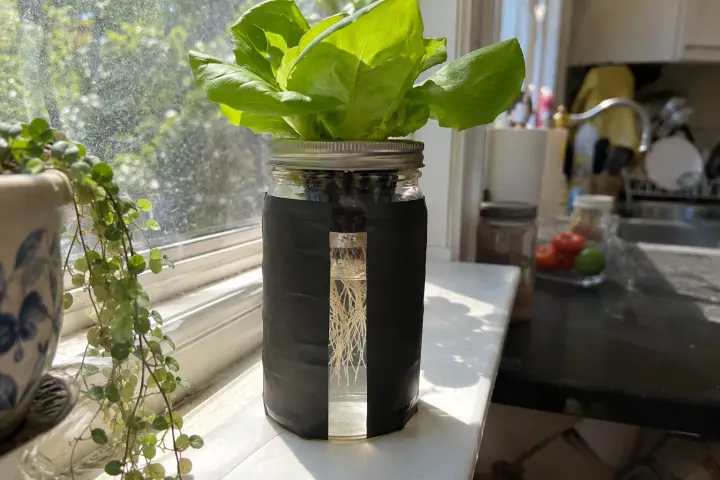
| Block all light | Opaque containers, cover every gap |
| Keep it clean | Remove dead leaves and roots, change solution regularly |
| Use beneficial microbes | Add an inoculant at every reservoir change |
| Kratky air gap | Never refill a Kratky container to the top |
Frequently asked questions
Can plants recover from root rot?
Yes, if enough healthy roots remain and the cause is fixed. New white roots growing over the brown ones are the best sign.
Is root rot contagious between plants?
Yes, through shared water. In a recirculating system, treat the whole system, not just the affected plant.
Does hydrogen peroxide cure root rot?
It kills pathogens in the water and adds oxygen briefly, but it breaks down in a day or two. It is a cleanup tool; cool water, aeration and good bacteria prevent the problem.
Next step
- Systems that resist it: deep water culture done right
- Other symptoms: yellow leaves
- Green water too? hydroponic algae